Four Hand Massage Techniques: Understanding Synchronized Movements
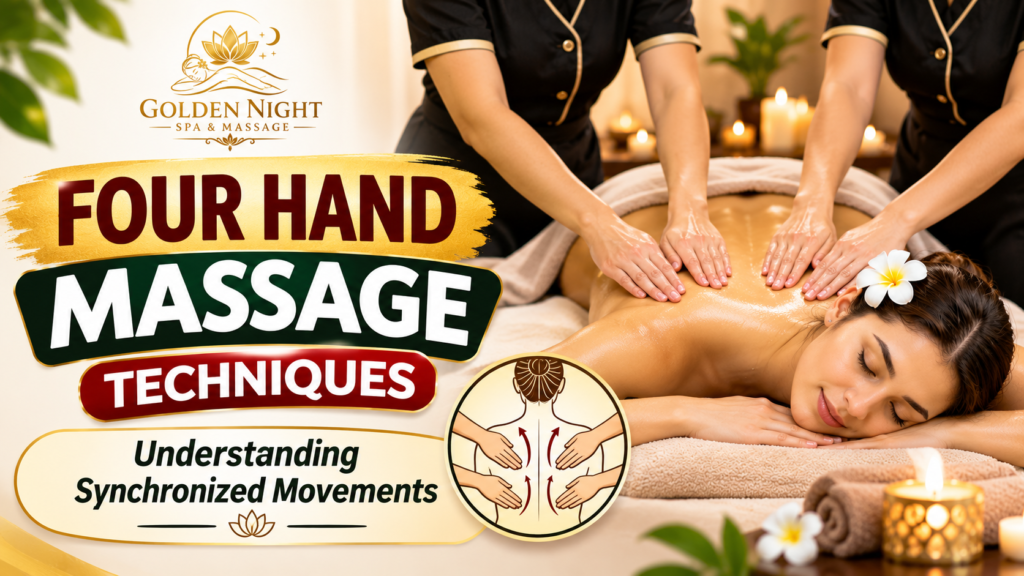
Four hand massage techniques are methods in which two trained therapists massage one person at the same time, using matched strokes, pressure and pacing. This guide explains how the synchronized movements work, how the treatment differs from a standard massage, and what a session feels like. It is written for first-time clients and for anyone comparing spas in Lucknow.
At Golden Night Spa in Alambagh, the four hand massage is treated as one planned routine, not two massages happening side by side.
What Is a Four Hand Massage?
A four hand massage is a spa treatment where two therapists work on your body at once, so you receive touch from four hands instead of two. It is also called a tandem or synchronized massage.
The therapists either mirror each other, for example one on each side of your back, or complement each other, with one on your shoulders while the other works on your calves. Because the touch comes from two places, your brain cannot easily predict the next movement. Many guests settle into deep calm within minutes.
SpaFinder describes the experience as similar to two full-body massages happening at the same time. It usually costs more than a single-therapist session because two professionals work for the whole appointment.
Most sessions use long, flowing strokes with warm oil as the base. Some add aromatherapy or firmer pressure where needed, so the routine can be adjusted to your goal, whether that is relaxing or easing a stiff back.
How Do Two Therapists Perform Synchronized Movements?
Two therapists perform synchronized movements by agreeing on a routine before the session, then matching speed, direction and pressure through breathing, body position and quiet signals. The process follows five steps:
- Plan the routine: The pair agrees on pressure, problem areas and the order of work.
- Start together: Both therapists apply oil and begin with the same stroke at the same moment.
- Match the tempo: They follow a shared breathing rhythm so each stroke has the same speed.
- Hand off smoothly: One therapist lifts away while the other keeps contact, so you never feel a gap.
- Finish together: The pace slows, pressure softens and both end at the same time.
The goal is simple: you should not be able to tell where one therapist’s stroke ends and the other begins. When the timing is right, the session feels like one continuous wave of touch.
Key Techniques Used in Four Hand Massage
The key techniques used in four hand massage are mirrored gliding, parallel kneading, split-body work, head-to-foot pairing and slow finishing strokes. Each one is built around two therapists moving as a pair.
- Mirrored gliding (effleurage): Both therapists glide along each side of the spine or each leg at the same speed.
- Parallel kneading (petrissage): Hands lift and roll the muscle in matching patterns to loosen tight areas.
- Split-body work: One therapist works on the upper body while the other covers the legs, so no area waits its turn.
- Head-to-foot pairing: One therapist supports the head and neck while the other works on the feet. This is often the most calming part.
- Slow finishing strokes: Light, gentle movements close the session and bring the body to rest.
Swedish-style strokes form the base of most routines. If you already enjoy that style, our Swedish massage will feel familiar, only with a second therapist added.
The Role of Rhythm and Coordination Between Therapists
Rhythm keeps both therapists touching at the same speed, while coordination decides which area each one works on and when they switch. Without both, the session feels uneven instead of smooth.
Good rhythm usually comes from slow, steady breathing. Therapists often match their strokes to the same breath count, which keeps the tempo even. Coordination covers the practical side:
- Who starts, and where
- When to move to the next body area
- How to cross over without breaking contact
- When to slow down or ease off
This matters because your body responds to predictable, steady touch by relaxing. If one therapist speeds up or presses harder than the other, the effect is jarring and the calming feeling is lost. Pairs who work together often build this timing through repeated practice, much like dancers rehearsing a routine.
Different Hand Movements Used During the Session
A four hand massage uses five main hand movements: gliding, kneading, pressing, circular strokes and light finishing strokes. Therapists combine them in a planned order.
| Movement |
What It Feels Like |
Where It Is Used |
| Gliding |
Long, smooth strokes |
Back, legs, arms |
| Kneading |
Rolling and lifting of muscle |
Shoulders, thighs |
| Pressing |
Steady, held pressure |
Upper back, hips |
| Circular strokes |
Small, round motions |
Neck, around the shoulder blades |
| Light finishing strokes |
Soft, slow touch |
Whole body at the end |
Because there are two sets of hands, these movements can happen in different places at once. One therapist may use slow gliding on your back while the other presses lightly along your calves. This overlap is what makes the session feel full and continuous.
How Pressure and Timing Are Balanced
Pressure and timing are balanced by agreeing on a pressure level at the start, then adjusting in small steps based on your feedback and how your body responds. Both therapists should use the same pressure on the same area.
A good session follows these habits:
- Start light: Pressure builds gradually instead of beginning firm.
- Use one scale: Light, medium or firm, so both therapists share the same target.
- Slow down on tender spots: Knots and sore areas get longer, gentler passes.
- Check in: You can ask for more or less pressure at any time.
Timing also matters. In a 60-minute session, the therapists cover the full body at a steady pace. A 120-minute session leaves room for slower transitions and extra focus on problem areas. Pressure and pace are always adjustable, so you never need to endure more than you want.
The Importance of Therapist Training and Communication
Training matters because two people can only move as one if they have practiced together and communicate clearly throughout the session. Skilled individual therapists are not automatically a skilled pair.
A well-prepared pair has three things in common:
- Shared practice: They have worked together long enough to match timing and pressure.
- Silent signals: They use breath, posture and small cues instead of talking over you.
- Safety knowledge: They know which conditions need a modified treatment.
If you are comparing spas, ask how long the therapists have worked as a pair. At Golden Night Spa, therapists are trained to work together with matched timing and pressure. The session also begins with a short consultation about pressure, injuries and allergies. Clear communication at that stage keeps the rest of the treatment comfortable. You can learn more about our team on the spa and massage page.
Four Hand Massage vs Traditional Massage
A four hand massage differs from a traditional massage mainly in the number of therapists, the sensory experience, the coverage of the body and the cost. The table below compares the two.
| Feature |
Four Hand Massage |
Traditional Massage |
| Therapists |
Two |
One |
| Body coverage |
Several areas at the same time |
One area at a time |
| Sensation |
Touch from two directions, hard to predict |
Touch from one direction |
| Best for |
Deep relaxation, special occasions |
Targeted work, routine care |
| Coordination needed |
High, requires a trained pair |
Low |
| Cost |
Higher, two professionals |
Lower |
| Pressure control |
Matched between two therapists |
Set by one therapist |
Neither option is better for everyone. If you want focused work on one stubborn knot, a deep tissue massage may suit you more. If your goal is full-body calm, a four hand massage is often the stronger choice. For slower, scent-led relaxation, try the aromatherapy massage.
What to Expect During a Four Hand Massage Session
A typical four hand massage lasts 60 to 120 minutes and follows five stages: consultation, settling in, synchronized strokes, focused work and a gentle finish. Arrive 10 to 15 minutes early so you can relax before you begin.
- Consultation: Therapists ask about pressure, problem areas, injuries and allergies.
- Settling in: You lie on the table, draped in warm towels, with soft lighting and calm music.
- Synchronized strokes: Both therapists begin together with warm oil and long, flowing movements.
- Focused work: Pressure builds on the back, shoulders, arms, legs and feet.
- Gentle finish: The pace slows and you get time to rest before getting up.
Check with your doctor first if you are pregnant, have a heart condition, blood clots or high blood pressure, have recent injuries or surgery, or have a skin condition, fever or infection. The Mayo Clinic and the NCCIH both offer general guidance on massage safety. To book, use our contact page.
Conclusion: Understanding the Art of Synchronized Massage
Four hand massage techniques work because two therapists move as one, using matched rhythm, pressure and timing to deliver continuous, predictable touch your body can relax into. The result is a calm, full-body session that a single therapist cannot easily copy.
If you want to try one, choose a spa with therapists trained to work as a pair, share your pressure preferences and health history, and give yourself time to rest afterwards. You can also pair the experience with a couple spa session or explore our full Thai massage menu.
Ready to book? Visit Golden Night Spa near Chandan Nagar Gate, Alambagh, Lucknow 226005, or call +91 9305944528 to reserve your four hand massage.
Frequently Asked Questions About Four Hand Massage