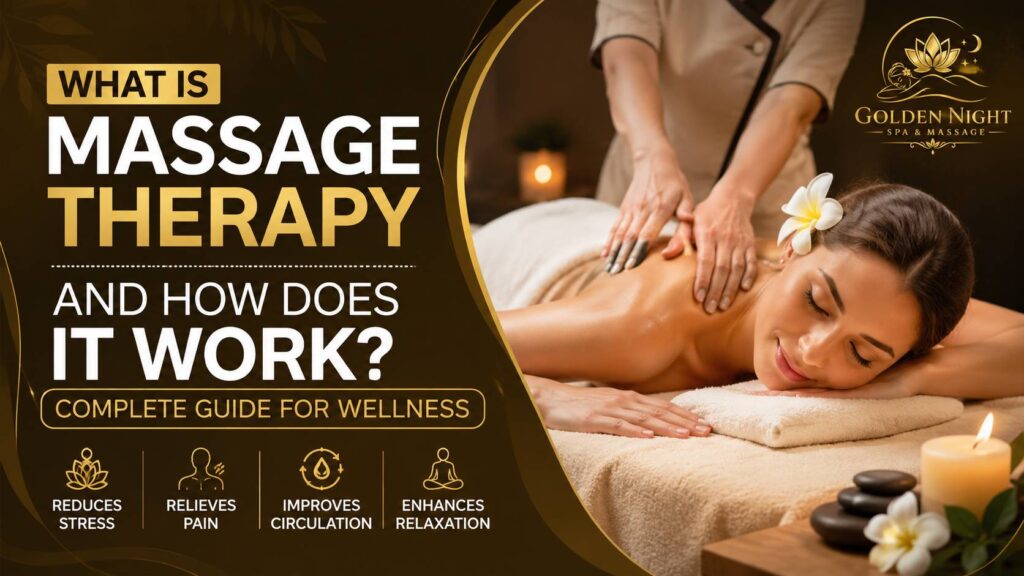
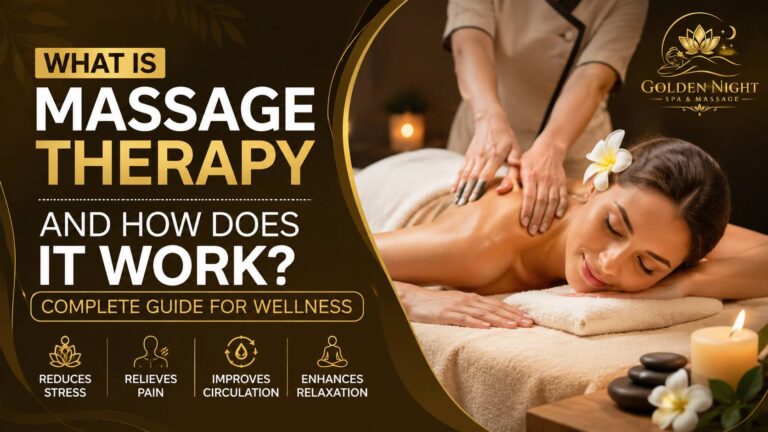
What is Massage Therapy and How Does It Work? Complete Guide for Wellness
Massage therapy is a hands-on healing practice where a trained professional applies pressure, friction, and manipulation to your muscles and soft tissues. It works by increasing blood flow, releasing muscle tension, and activating your body’s natural relaxation response. Most people experience stress relief, pain reduction, and improved mobility after a single session.
What is Massage Therapy?
Massage therapy is a clinical health practice that involves applying controlled pressure to muscles and soft tissues in your body. A certified massage therapist uses their hands, forearms, elbows, and sometimes special tools to manipulate your muscles and connective tissues.
Key Definition Points:
- It’s a licensed healthcare profession
- Involves physical manipulation of soft tissues
- Can be therapeutic or relaxation-focused
- Based on anatomical and physiological science
The practice dates back thousands of years, with ancient cultures in China, India, and Egypt using massage for healing. Today, it’s recognized by major health organizations worldwide as an effective wellness tool..
How Does Massage Therapy Work?
Understanding the mechanism of massage helps explain why it’s so effective:
1. Increases Blood Circulation
When a massage therapist applies pressure to your muscles:
- Blood vessels dilate (expand)
- More oxygen reaches your tissues
- Nutrients are delivered more efficiently
- Waste products (like lactic acid) are removed faster
This improved circulation is why you feel warm and energized after a massage.
2. Reduces Muscle Tension
Your muscles tighten from stress, poor posture, and physical activity. Massage:
- Breaks up muscle knots (trigger points)
- Improves flexibility in tight muscles
- Reduces muscle spasms
- Restores normal muscle function
3. Activates the Parasympathetic Nervous System
Your nervous system has two modes:
- Sympathetic: Fight-or-flight (stressed)
- Parasympathetic: Rest-and-digest (relaxed)
Massage activates the parasympathetic response by:
- Lowering cortisol (stress hormone)
- Releasing endorphins (feel-good chemicals)
- Reducing heart rate and blood pressure
- Promoting relaxation
4. Increases Lymphatic Drainage
Your lymphatic system removes waste and toxins. Massage:
- Stimulates lymph movement
- Boosts immune system function
- Reduces inflammation
- Helps your body heal faster
Types of Massage Therapy
| Massage Type |
Best For |
Pressure |
Duration |
| Swedish Massage |
Relaxation, stress relief |
Light to medium |
60-90 mins |
| Deep Tissue |
Chronic pain, muscle tension |
Firm, intense |
60-90 mins |
| Aromatherapy |
Emotional balance, mental clarity |
Gentle to medium |
60-90 mins |
| Hot Stone |
Muscle relaxation, energy flow |
Medium to firm |
90 mins |
| Reflexology |
Whole body healing via feet |
Targeted pressure |
45-60 mins |
| Thai Massage |
Flexibility, energy balance |
Medium to firm |
60-90 mins |
| Sports Massage |
Athletic recovery, injury prevention |
Firm, targeted |
45-90 mins |
Most Popular Types Explained:
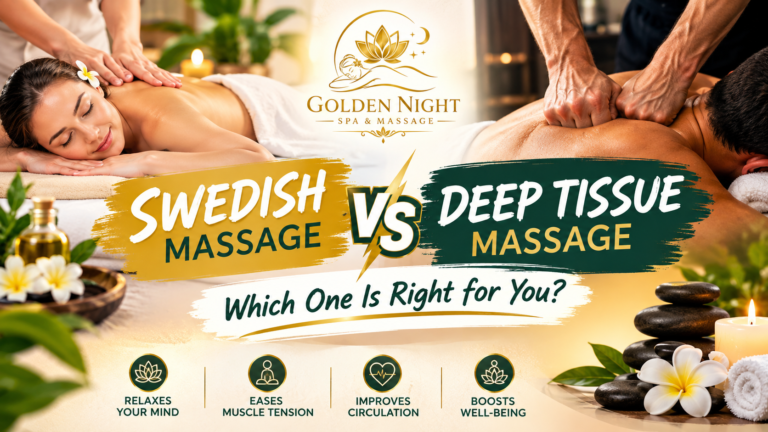
Swedish Massage
- Long, gliding strokes
- Gentle and relaxing
- Perfect for first-timers
- Great for stress relief
Deep Tissue Massage
- Targets deep muscle layers
- Stronger, more intense pressure
- Ideal for chronic pain
- Best for muscle tension
Aromatherapy Massage
- Combines massage with essential oils
- Adds emotional healing benefits
- Calms anxiety and promotes sleep
- Engages all senses
Different Massage Techniques
Kneading
- Pressing and rolling muscles
- Releases tension and improves flexibility
- Often used on larger muscle groups
Circular Motions
- Small or large circular movements
- Increases blood flow
- Soothes muscle soreness
Stroking (Effleurage)
- Long, smooth gliding movements
- Calms nervous system
- Promotes relaxation
Percussion (Tapping)
- Rhythmic tapping or drumming
- Stimulates muscles and improves circulation
- Energizing and invigorating
Pressure Point Release (Acupressure)
- Sustained pressure on specific points
- Releases tension and activates healing
- Based on ancient Eastern medicine
Stretching
- Passive or active stretching during massage
- Improves flexibility and range of motion
- Prepares muscles for activity
What Happens During a Massage Session
Timeline of a Typical 60-Minute Massage:
First 5 Minutes – Consultation
- Therapist discusses your health history
- You explain problem areas
- Pressure level is determined
- Any allergies or injuries are noted
Next 5-10 Minutes – Preparation
- You change into comfortable clothing
- Position yourself on massage table
- Therapist uses proper draping for comfort and privacy
- Soft music and aromatherapy set the mood
Main 40-45 Minutes – The Massage
- Therapist uses various techniques
- Combines different pressure levels
- Works on all areas of body or focuses on problem spots
- You experience deep relaxation
Final 5 Minutes – Cool Down
- Therapist ends with gentle, calming strokes
- Slowly brings you back to awareness
- Offers water and rest time
- Discusses what you can do at home
What You’ll Experience:
✅ Warmth and relaxation
✅ Possible muscle twitching (normal)
✅ Peaceful mental state
✅ Sometimes emotional release
✅ Deep, natural sleep afterward
Safety and Precautions
| Condition | Reason |
| Fever or Infection | Can spread illness; rest is needed |
| Open Wounds or Rashes | Risk of infection or irritation |
| Acute Inflammation | Can worsen the condition |
| Recent Surgery | Wait 4-6 weeks minimum |
| Blood Clots | Deep pressure could dislodge clot |
| Severe Osteoporosis | Bones are too fragile |
| Uncontrolled High Blood Pressure | Massage may spike blood pressure |
Always Inform Your Therapist About:
- Current medications
- Recent injuries or surgeries
- Chronic health conditions
- Allergies (especially to oils)
- Areas of sensitivity or pain
Safety Tips:
✅ Choose a licensed, certified massage therapist
✅ Verify therapist credentials and certifications
✅ Communicate openly during the session
✅ Never be afraid to speak up about pressure
✅ Allow at least 2-3 hours after massage before eating heavy foods
✅ Drink plenty of water afterward
Scientific Research Behind Massage
Evidence-Based Benefits:
According to research from the National Center for Complementary and Integrative Health (NCCIH):
✅ Reduces Stress: Studies show massage reduces cortisol levels by up to 30%
✅ Improves Sleep: 50% of massage clients report better sleep quality
✅ Pain Relief: Effective for chronic pain management comparable to medication
✅ Enhances Immune Function: Regular massage increases white blood cell activity
✅ Lowers Blood Pressure: Consistent massage therapy reduces hypertension
✅ Improves Flexibility: Increases range of motion and mobility
Key Takeaway
Massage therapy is a science-backed wellness practice that works through multiple biological mechanisms: increasing circulation, releasing muscle tension, activating relaxation responses, and promoting overall healing. Whether you’re dealing with chronic pain, stress, or simply want to maintain wellness, regular massage can be a powerful addition to your healthcare routine.
The best massage is the one that fits your needs and goals. Start with a consultation with a certified therapist to determine what type is right for you.
Get Your Massage Therapy Today